
Bespoke Event Design Services: What Sets Luxury Planning Apart
Table of Contents
What Bespoke Event Design Services Actually Include
Custom Event Design: From Vision to Execution
Event Design and Decor: Creating Immersive Environments
VIP Event Concierge Services: White-Glove Coordination
Event Planner Comparison: How to Evaluate Your Options
Step 1: Define your design scope before you talk to anyone
Step 2: Score each designer on the same six dimensions
Step 3: Ask the five questions that separate designers from decorators
Step 4: Read the contract like a buyer, not a guest
Step 5: Weight the score to your priorities
Common red flags when comparing designers
The Design Process and Timeline
Phase 1: Discovery and brief (typically 2-4 weeks)
Phase 2: Concept development (typically 3-6 weeks)
Phase 3: Design development and vendor contracting (typically 6-12 weeks)
Phase 4: Production and pre-event confirmation (typically 2-4 weeks out)
Phase 5: Install, event day, and strike
What actually drives the timeline
What actually drives the budget
A realistic planning window
How to keep the timeline on track
Why Bespoke Design Matters for Your Celebration
Frequently Asked Questions
Last Updated: October 9, 2026
What Bespoke Event Design Services Actually Include
Bespoke event design means custom, personalized event planning built entirely around your vision and preferences. Unlike templated approaches, bespoke services create one-of-a-kind celebrations tailored to your needs, aesthetic, and budget.
True bespoke event design goes far beyond picking colors and flowers. It includes consultation on your vision, custom design concepts, full vendor coordination, floral styling, tablescape refinement, and seamless day-of execution.
The difference between generic planning and bespoke event design is intentionality.
Pro Tip The most overlooked aspect of bespoke design is the discovery process. Spend time upfront articulating not just what you want, but why it matters. This clarity becomes the foundation for every design decision that follows.
Custom Event Design: From Vision to Execution
Creating a custom event concept begins with your story. We don't start with Pinterest boards or trend forecasting, but with you: your values, preferences, and the feeling you want guests to experience when they walk in.
The design process unfolds in clear phases. Initial consultation focuses on listening: your vision, purpose, guest count, venue details, timeline, and constraints.
Once you've selected a direction, we move into detailed planning and vendor coordination.
Key Takeaway The design process is iterative. Expect 2-3 rounds of concept refinement before finalizing your direction. This back-and-forth ensures the final result truly matches your vision, not our interpretation of it.
Event Design and Decor: Creating Immersive Environments
Event design and decor work together to transform a space into an experience. The venue is your canvas.

Immersive decor means every zone reinforces the same aesthetic and emotional tone: your entrance should match your reception, which flows into your dining space.
The common mistake is treating decor as an afterthought to fill space.
Bespoke designers source unique decor elements that match your aesthetic rather than defaulting to what's available, custom installations, rare florals, vintage rentals, so the space feels personal, elevated, and entirely yours.
VIP Event Concierge Services: White-Glove Coordination
White-glove VIP event concierge services mean a dedicated point person manages every detail so you can enjoy your celebration.
A true concierge service includes pre-event vendor coordination, detailed timeline creation, day-of setup oversight, guest experience management, and real-time troubleshooting.
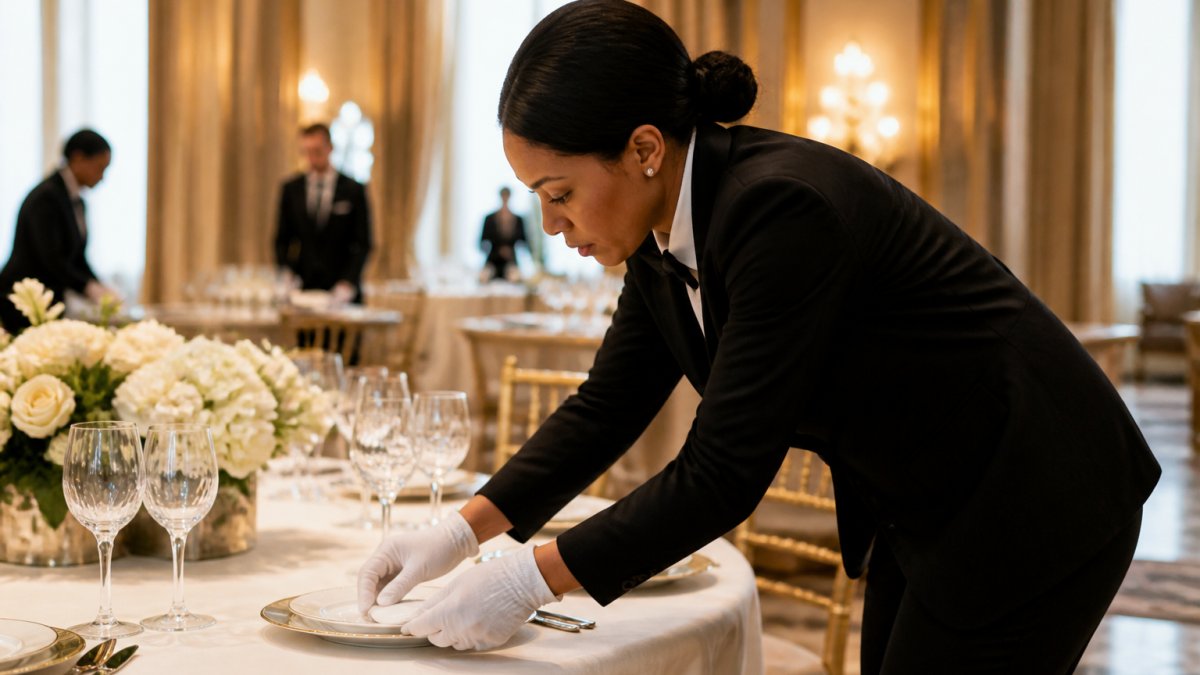
On event day, your concierge team manages setup, vendor arrivals, service flow, and guest logistics, ensuring every moment unfolds as designed.
Watch Out Many event planners claim white-glove service but provide limited on-site presence. Verify exactly how much time your planner will spend at your event and what their responsibilities include. Vague commitments often mean limited support when you need it most.
Event Planner Comparison: How to Evaluate Your Options
Most ranking pages for this topic are directories and vendor profiles, with no structured way to compare bespoke designers. This section fills that gap: a repeatable framework you can run on any shortlist, whether two designers or five.
Step 1: Define your design scope before you talk to anyone
Write down four things: event type (wedding, milestone celebration, brand activation, corporate gala), guest count, venue status (booked or still searching), and your non-negotiables (a live floral installation, a specific cuisine, a cultural tradition). Designers price and staff very differently based on these inputs, so a quote without them is not comparable.
Step 2: Score each designer on the same six dimensions
Use a simple 1-5 scale per row and total it, turning a gut-feel decision into a side-by-side comparison.
Dimension | What a 5 looks like | What a 1 looks like |
Design authorship | Original concepts built for your brief; can explain the "why" behind each choice | Repeats a signature look regardless of your brief |
Scope clarity | Written proposal listing every inclusion, exclusion, and assumption | Verbal promises; inclusions defined only after you sign |
Vendor network | Named, established relationships with florists, rental houses, lighting, and catering in your market | "We'll source whoever is available" |
Communication cadence | Defined check-in schedule and a single point of contact | Ad hoc replies; you chase updates |
Production capability | Handles load-in, install, strike, and on-site troubleshooting, not just the plan | Stops at the design deck; you manage day-of logistics |
Contract transparency | Payment schedule, cancellation terms, and change-order process in writing | Deposits with no stated refund or reschedule policy |
Step 3: Ask the five questions that separate designers from decorators
"Walk me through a concept you pitched that the client rejected. What did you change?" This reveals whether the designer adapts or defends.
"Who is physically on site during load-in and strike?" Bespoke design lives or dies in the install hours, not the planning meetings.
"What is your change-order process once the design is approved?" Custom fabrication and rare florals rarely stay on budget without a written process.
"Which parts of my event would you sub-contract, and to whom?" A designer with real vendor relationships answers this instantly.
"Show me a project at my guest count and budget band." Scale matters. A designer who excels at 60-guest dinners may not have the crew for a 600-guest gala.
Step 4: Read the contract like a buyer, not a guest
Three clauses decide most disputes: the payment schedule (a deposit at signing with milestone payments tied to design approval, vendor contracting, and event week), the cancellation and reschedule policy (postponement terms are usually separate), and the force majeure and weather clause for outdoor or tented events. Get these in writing before comparing final numbers.
Step 5: Weight the score to your priorities
Not every dimension matters equally. A brand activation client should weight production capability and vendor network heavily; an intimate milestone celebration should weight design authorship and communication cadence. Re-weight, re-total, and the shortlist usually sorts itself.
Key Takeaway A bespoke designer's value shows up in three places: the originality of the concept, the specificity of the written scope, and the crew that shows up on install day. If any of those three is vague, the quote is not comparable to one that is specific.
Common red flags when comparing designers
A portfolio where every event looks like the same event in different colors.
A proposal that lists "design and coordination" without itemizing florals, rentals, lighting, labor, and install/strike.
No named on-site lead, or a lead who is not the person you have been talking to.
Run every shortlisted designer through the same five steps and six-dimension score. The comparison stops being about who has the prettiest Instagram grid and starts being about who can actually deliver your event.
The Design Process and Timeline
This section breaks the design process into the phases a bespoke project actually moves through, with the decision gates that determine whether your timeline holds and the cost drivers that determine whether your budget holds.
Phase 1: Discovery and brief (typically 2-4 weeks)
A listening phase, not a pitching phase. You and the designer establish event type, guest count, venue status, budget band, must-haves, and the feeling you want guests to have. Output: a written brief both sides sign off on. Decision gate: if the brief isn't written down, every later phase drifts.
Phase 2: Concept development (typically 3-6 weeks)
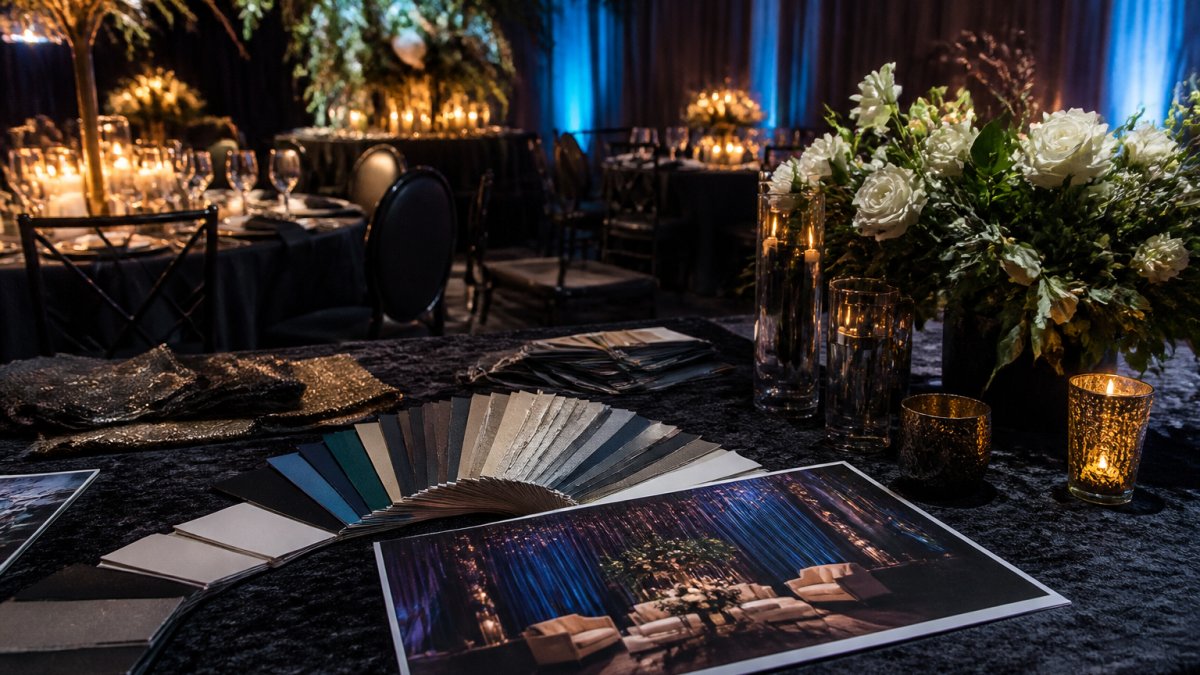
You receive one to three design directions, each with a color story, floral direction, tablescape approach, lighting mood, and visual references. Expect two to three rounds of refinement. Decision gate: select one direction to develop. Keeping two alive doubles design hours and vendor outreach.
Phase 3: Design development and vendor contracting (typically 6-12 weeks)
The longest phase, and the one most timelines underestimate. The designer translates the approved concept into a line-item scope: florals, rentals, linens, lighting, drapery, backdrops, entertainment, and catering presentation. Vendors are sourced, quoted, and contracted. Decision gate: every contract signed and every custom element ordered. Custom fabrication, rare florals, and specialty rentals carry the longest lead times and drive most schedule risk.
Phase 4: Production and pre-event confirmation (typically 2-4 weeks out)
Final counts go to catering, rental orders are confirmed, and load-in and strike windows are scheduled with the venue. The run-of-show and floor plans are finalized, with contingency plans for weather, late deliveries, and no-shows. Decision gate: a final venue walkthrough and a locked run-of-show.
Phase 5: Install, event day, and strike
Load-in, install, event execution, and strike. This is where the design either lands or does not. The on-site lead runs vendor arrivals, setup, service flow, and troubleshooting. Strike is scheduled with the venue and included in the scope.
What actually drives the timeline
Venue availability and load-in windows. A venue that only allows a two-hour load-in window compresses install and may require more crew.
Custom fabrication and rare florals. These carry the longest lead times and are the most common cause of schedule slip.
Guest count changes. A 20% swing in headcount ripples through catering, rentals, seating, and florals.
What actually drives the budget
Florals and installations. Volume, species rarity, and installation complexity are the biggest swing factors.
Rentals and furnishings. Specialty and vintage pieces cost more than standard inventory and often carry delivery and pickup fees.
Lighting and drapery. These transform a room more than almost any other line item per dollar, but rigging and power requirements add labor.
A realistic planning window
For a full bespoke design, most practitioners find a 6-12 month runway comfortable, with 9-12 months preferred for peak-season weddings and large galas. A 3-6 month window is workable if you accept a narrower design scope and standard rentals. Under 2 months, expect to simplify the design, pay expedite premiums, and accept limited custom fabrication. Discuss timeline constraints with your designer before you sign, not after.
Watch Out A compressed timeline does not just cost more. It narrows your vendor pool, because the best florists, rental houses, and lighting crews book out first. If your date is fixed and close, ask the designer which elements can be simplified without losing the concept.
Pro Tip Ask your designer for the phase-by-phase schedule in writing at the proposal stage. A designer who can show you the decision gates and lead times up front is a designer who has run this process before.
How to keep the timeline on track
Approve concepts within the window your designer sets. Delay is the single most controllable risk.
Lock the guest count as early as your venue and catering allow.
Order custom and rare elements first, since they carry the longest lead times.
Confirm load-in and strike windows with the venue in writing.
Keep one decision-maker on your side. Committees slow every gate.
Why Bespoke Design Matters for Your Celebration
In a world of cookie-cutter events, bespoke event design offers something increasingly rare: intentionality.
Bespoke design matters because your event is not just a party; it's a moment when the people you care about come together.
The investment in bespoke event design pays dividends in guest experience and the longevity of memories.
At Champagne Caviar Events Design & Services, we believe every celebration deserves this level of care.
When you're ready to explore how bespoke event design can elevate your celebration, reach out for a consultation. We specialize in transforming venues into immersive environments that reflect your unique vision, delivering flawless execution and personalized attention throughout the entire process.
Frequently Asked Questions
What does bespoke event design include?
Bespoke event design encompasses custom concept development, creative direction, full venue transformation, custom floral styling, refined tablescapes, decor rentals, lighting design, and complete vendor coordination. It includes design consultation to understand your vision, a detailed design proposal, on-site management, and setup and breakdown. The service ensures every element—from ceremony design to reception layout—reflects your specific preferences and creates a cohesive, immersive guest experience tailored entirely to your celebration.
How do I choose an event planner for a luxury event?
Evaluate planners based on portfolio evidence from recent events matching your vision, their design process and timeline transparency, vendor coordination capabilities, and how they handle contingencies. Request references from clients with similar event scopes. Ask about their approach to custom installations, floral design, and venue transformation. Assess whether they offer white-glove concierge services and can manage all logistics so you remain stress-free. Meet in person to confirm their sophistication, attention to detail, and understanding of elevated hospitality aligns with your expectations.
What is the difference between event planning and event design?
Event planning focuses on logistics, coordination, and execution—managing vendors, timelines, and budgets. Event design emphasizes the creative vision, aesthetic transformation, and sensory experience. Bespoke event design services combine both: they handle full-service planning while creating a custom, immersive environment that reflects your unique vision. The distinction matters because true bespoke design goes beyond coordination to deliver jaw-dropping creativity and memorable occasions that feel entirely personalized, not generic.
Can an event designer transform an existing venue?
Yes. Bespoke event designers specialize in transforming ordinary venues into extraordinary environments through custom installations, premium draping, custom floral arrangements, refined centerpieces, strategic lighting, and creative backdrops. They assess the venue's architecture and limitations, then use design expertise to create an immersive space that bears no resemblance to its original state. This capability is especially valuable when your ideal venue lacks the aesthetic you envision, as skilled designers can completely reimagine the space to match your celebration's theme and tone.
Schedule Consultation

Comments