
What Does Full-Service Wedding Planning Cost in 2026?
Last Updated: October 28, 2026
Quick Summary
The cost of full-service wedding planning in 2026 depends on your total wedding budget, guest count, design complexity, and venue location. Most planners who use a percentage model charge 10% to 15% of the total wedding budget, while flat fees commonly fall between $3,500 and $12,000 for mid-range weddings.
Percentage-based fees typically run 10% to 15% of the total wedding budget, with 12% to 15% common in higher-cost metros.
Flat fees for full-service planning commonly fall between $3,500 and $12,000 for mid-range weddings.
On a $60,000 budget, a 12% fee would be $7,200 and a 15% fee would be $9,000.
Luxury or destination celebrations with multi-day logistics can exceed $20,000 in flat fees.
Ask whether the percentage is calculated on the total budget or on vendor spend only.
Table of Contents
What Full-Service Wedding Planning Costs in 2026
The cost of full service wedding planning in 2026 depends on four variables: your total wedding budget, guest count, design complexity, and whether your venue sits outside a major metro. No two celebrations share the same scope. Full-service wedding planning is a comprehensive engagement in which a planner manages design, vendor selection, budget, logistics, and wedding-day execution from contract signing through final send-off. Below, we break down the pricing models, what each fee actually buys, and the contract terms that change your final number.
Why There Is No Single Sticker Price
No industry-wide rate card exists for full-service wedding planning. Planners price against labor hours, vendor coordination load, and design scope, and those inputs swing widely between a 75-guest garden wedding and a 250-guest ballroom production with custom draping and full floral installations. The Better Business Bureau's guidance on hiring event professionals is a reasonable starting point for vetting, but your real number comes from a proposal built around your specific event.
The Four Numbers That Set Your Fee
Four inputs drive nearly every full-service quote:
Total wedding budget, the base for percentage-based fees
Guest count, determines catering, rentals, staffing, and coordination hours
Design complexity, custom florals, draping, lighting, and venue transformation add planning labor
Venue and location, remote or raw-space venues require more vendor logistics
Change any one of these and the planning fee moves. A couple doubling their guest list should expect a higher quote even if the design stays identical.
Wedding Planner Pricing Models Explained
Planners generally use one of three pricing models: flat fee, percentage of wedding budget, or hourly. Each model produces a different number for the same scope, so the model matters more than the rate itself. Ask any planner which model they use and why before you compare proposals.
Flat Fee vs. Percentage of Wedding Budget
A flat fee is a fixed planning fee agreed at contract signing, regardless of what you spend on vendors. A percentage fee is calculated as a share of your total wedding budget, so it rises as your budget rises. Most full-service planners who use a percentage model set their fee somewhere in the range of 10% to 15% of the total wedding budget, with 12% to 15% common in higher-cost metros and for design-heavy events.
Fee model | How it is calculated | Best fit | Watch-out |
Flat fee | Fixed amount set at signing | Couples who want cost certainty | Scope creep can trigger add-on fees |
Percentage | 10%-15% of total wedding budget | Uncertain scope, larger budgets | Fee rises every time the budget rises |
Hourly | Billed per planning hour | Add-ons, design consulting | Total is unpredictable for full service |
Hybrid | Base fee plus percentage or hourly add-ons | Complex or multi-day events | Hardest to compare across proposals |
Pro Tip Ask each planner to price the same scope under their model and to state in writing whether the fee is a percentage of the total budget or only of vendor spend. Those two definitions can differ by thousands of dollars.
Worked Examples Across Three Budget Levels
Because we do not publish rate cards, here is how the models behave on sample budgets rather than what any one planner charges. To see our own pricing and investment levels, review our investment.
Modest budget ($25,000 total): A 12% percentage fee would be $3,000; a flat fee in the $3,500-$5,000 range is common.
Mid-range budget ($60,000 total): A 12% fee would be $7,200; a 15% fee would be $9,000. A flat fee of $6,000-$9,000 is typical. The two models often land close together once scope is defined, so compare inclusions line by line.
High-end budget ($150,000 total): A 12% fee would be $18,000; a 15% fee would be $22,500. Flat fees at this level commonly run $15,000-$30,000 or more when the planner carries full design production and multi-day logistics.
Ask whether a minimum spend applies and how it interacts with the percentage. Also ask whether the percentage is calculated on the total budget or on vendor spend only, because the difference on a $60,000 wedding can be several thousand dollars.
How to Compare Proposals That Use Different Models
Convert every proposal to a single number: the total planning fee for the same scope. Then check what sits outside that number. A flat fee that excludes design production may cost more overall than a percentage fee that includes it. Request a written scope sheet from each planner listing hours, staffing, vendor management, design work, and wedding-day coverage, and compare those sheets side by side before you compare the fees.
What Does a Full-Service Wedding Planner Include?
A full-service wedding planner may include a range of services. For a deeper explanation of what a wedding planner does, see our guide. The difference between full-service and lighter packages is who carries the decisions.

Itemized Inclusions in a Full-Service Package
Use this list to interrogate each proposal.
Consultation and planning meetings: An initial discovery meeting plus a set number of planning meetings, commonly 6 to 12 across the engagement, with unlimited phone and email support during business hours.
Custom checklist and timeline: A planning timeline built for your date, updated monthly, with vendor deadlines and payment due dates.
Venue selection support: Site visits, capacity and layout review, and contract review before you sign.
Vendor selection and management: Shortlists of two to three vendors per category, contract review, and ongoing communication with vendors on your behalf.
Budget management: A working budget spreadsheet with payment tracking, deposit reminders, and change-order review.
Design development: Event design direction, tablescapes, floral direction, rentals, lighting, and a design presentation or mood board.
Logistics coordination: Rentals, catering, and bar service coordination, including load-in and load-out schedules.
Wedding day coordination: A documented run of show, vendor confirmations, and on-site management with a lead planner plus assistants. Ask how many staff hours are included and what the ratio of planners to guests is.
Rehearsal coordination: Rehearsal direction, sometimes listed as a separate line item.
Watch Out Ask what is excluded. Common exclusions are design production labor, floral installation, custom fabrication, travel beyond a set radius, additional staffing beyond the included hours, and rehearsal dinner coordination. A low fee with vague inclusions often means these are billed later at vendor rates.
Where Full-Service Ends and Partial Planning or Day-Of Coordination Begins
Partial planning usually starts mid-process: you have booked the venue and some vendors, and the planner fills gaps, reviews contracts, and builds the timeline. Month-of coordination begins several weeks out and covers logistics only. Day-of coordination covers the event itself (Hiring a Day-of Coordinator). Full-service is the only tier where the planner is involved in design and vendor selection from the start.
Questions and Checklist for Comparing Proposals
Use this checklist to turn price research into a booking decision. Ask each planner to answer in writing.
Scope: Which tasks sit with the planner versus with you? Request a written scope sheet.
Staffing: How many planners and assistants are on site, and for how many hours? What is the overtime rate?
Communication: What is the response time, and who is your point of contact on the day?
Deliverables: What design documents, timelines, and budgets will you receive, and when?
Exclusions: What is not included, and what are the add-on rates for travel, assistants, and overtime?
Contract terms: What is the payment schedule, cancellation and postponement policy, and how are scope changes priced?
References: Can you speak with two recent couples whose weddings resembled yours in size and complexity?
A planner who answers these precisely, in writing, is a planner who has done this before. Our frequently asked questions cover several of these directly.
Full-Service Wedding Planning Timeline: Month by Month
The full-service wedding planning timeline varies. Here is a sequence:
Phase | Timing | Core Work |
Discovery | Month 1 | Consultation, budget framework, guest count |
Foundation | Months 2-3 | Venue selection, vendor shortlists |
Design | Months 3-5 | Event design, floral direction, rentals |
Booking | Months 4-7 | Contract review, vendor management |
Refinement | Months 8-10 | Timeline build, tastings, detail review |
Execution | Final 6 weeks | Run of show, wedding day coordination |
Cost Differences by Wedding Size, Complexity, and Destination
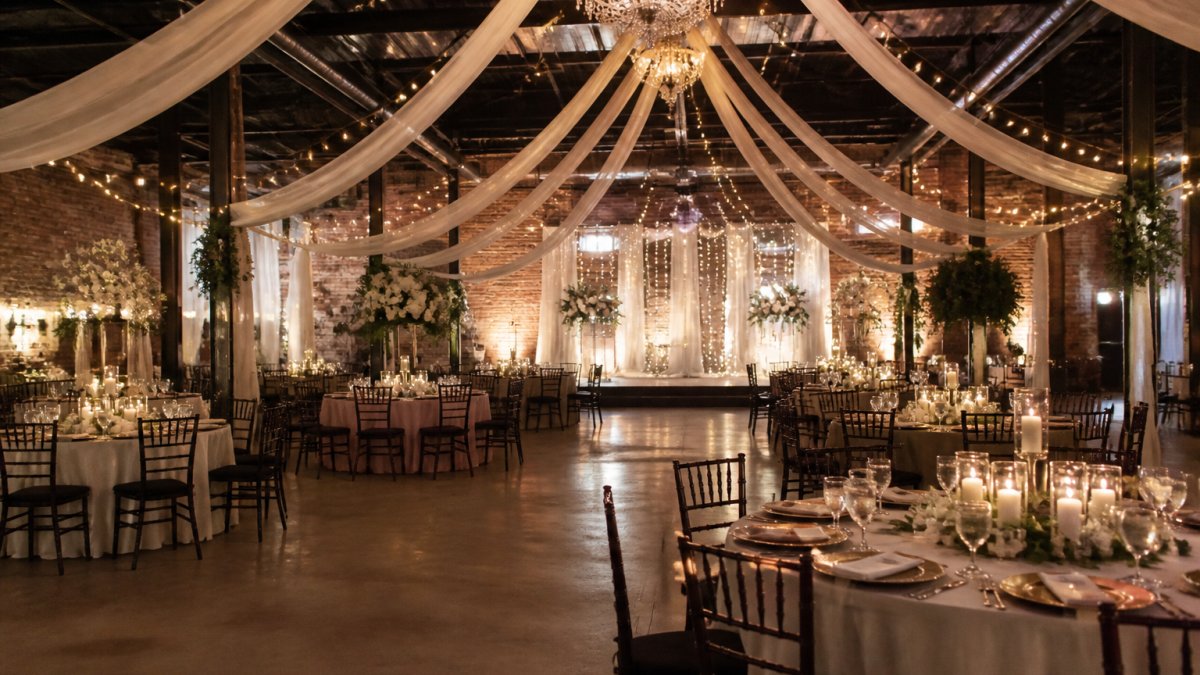
Guest count and complexity can affect planning needs. A 150-guest wedding with custom florals and a full venue transformation differs from a 60-guest dinner. Couples planning a luxury celebration can review luxury wedding planning services in Atlanta to see how local service scope affects complexity and cost.
Questions to Ask a Wedding Planner Before You Sign
Ask these before signing: What is your pricing model, and what exactly does the fee include? How many events do you take per month? Who is my point of contact on the day? What is your backup plan if a vendor cancels? What is your cancellation and payment schedule? Can I see recent portfolios and references? How do you handle weather contingencies? And critically: which tasks sit with you versus with me?
Additional Costs and Contract Terms That Change the Total
The planning fee is not the whole number. Budget separately for:
Design and decor production beyond the planning fee
Rentals and draping, often billed by the vendor, not the planner
Travel and site visits for remote or destination venues
Assistant or additional staffing on the wedding day
Rehearsal dinner coordination, sometimes a separate line item
Vendor meals and gratuities, frequently overlooked
Read the contract for the payment schedule, the cancellation and postponement terms, what happens if the guest count changes, and whether the fee covers design production or planning only. Watch out: a low planning fee paired with vague inclusions often means design production and day-of staffing are billed later at vendor rates.
Schedule a Consultation to Get Your Custom Planning Quote
Published ranges will not tell you what your wedding costs to plan. Your guest count, venue, design ambition, and date do. At Champagne Caviar Events Design & Services, we offer white-glove concierge planning, custom event design, bespoke floral styling, and refined tablescapes. Bring your vision and your budget framework.
Frequently Asked Questions
How much does full-service wedding planning cost?
Full-service wedding planning costs depend on the scope of the event. For information about Champagne Caviar Events Design & Services pricing, request a quote.
How do wedding planners charge for full-service planning?
Wedding planner pricing structures vary. Ask Champagne Caviar Events Design & Services for current pricing or a quote.
What does a full-service wedding planner include?
Champagne Caviar Events Design & Services offers bespoke luxury event planning, custom event design, bespoke floral styling, refined tablescapes, and white-glove VIP concierge services. Ask about the services included for your event.
When should I hire a full-service wedding planner?
The right time to begin planning depends on your event. Schedule a consultation to discuss your date and planning needs.
Is a percentage-based planner fee worth it compared to a flat fee?
The right pricing structure depends on the planner's terms and your event. Ask Champagne Caviar Events Design & Services for current pricing or a quote.
What extra costs should I expect beyond the planning fee?
Additional costs depend on the event and its scope. Ask Champagne Caviar Events Design & Services which costs may apply and request a quote.
The hardest part of budgeting full-service planning is comparing proposals that describe scope in different language. We quote each wedding individually and walk you through every inclusion before you commit. Schedule your free consultation and get a custom planning quote built around your guest count, venue, and design vision.


Comments